
Welcome to the first Bridge newsletter! The Bridge is an Erasmus+ funded project and the short name stands for Bridging Integrity in Higher Education, Business and Society. Within the project, we seek to create a bridge between the academic sphere, business and society in order to reach a broader understanding of interrelated aspects of integrity between these fields. We plan to send this project newsletter every several months and in each newsletter, we will inform you about the project outputs, and project-related events and will share the news from related areas. Subscribe to the newsletter, and follow us on Twitter and Facebook not to miss any news!
Literature review and partner country perspectives
First intellectual output (O1) focused on designing national reports through a desk research of existing documents, policies, strategies, and guidelines by project partners in order to analyze national contexts of bridging academic integrity (AI) and research integrity (RI). The national analysis reports mapped out how academic and research integrity is understood within the national context, what definitions of academic and research integrity are used, and whether the positive or negative dimensions of academic and research integrity are stressed and whether the focus was on the prevention, detection, and/or reaction.
The purpose of this output was to provide further insights into the academic integrity infrastructure in the project partner countries and produce reports which exemplified the connection between AI, RI, business ethics, and citizen science ethics. The mapping has pointed to the extensive differences between the project countries (i.e. Czechia, Sweden, Lithuania, Ukraine, and North Macedonia) as well as the need to further develop the connections between academic integrity, research integrity, business ethics, and citizen science ethics by engaging master and doctoral students and their supervisors – and thus formed the basis for the development of outputs 2-5.
Checklists bridging academic integrity and research integrity
One of the outputs that the project team is currently completing is the development of checklists for master students, doctoral students, and their supervisors. The aim of these checklists is to assist the target groups in the writing process of the thesis or the first publication in accordance with the norms and values of academic and research integrity. The checklists are focusing on keeping the best research practices and avoiding risks of research misconduct. The checklist for the master students is primarily for students, who are writing their first thesis. The content guides students through formal requirements, planning, academic reading and writing, and different stages of research. The checklist for the doctoral students should serve students who are at the beginning of their doctoral studies and are writing their first publication or doctoral thesis. The content is focusing on the questions on how to formulate the research, academic reading and writing, data collection and analysis, as well as the collaborative work. The checklist for supervisors is more general and suitable for supervisors of master and doctoral students. Being a supervisor is a huge responsibility and the aim of this checklist is to ensure supervisors not to forget any steps from the initial stage of the supervision to the very end.
Guidelines for Research Ethics and Research Integrity in Citizen Science
Citizen science (CS) is a rapidly evolving approach in many research fields. Such projects involve citizens as active contributors to the research. Citizen involvement can be realized in various steps of research ranging from the data collection, data analysis to the design of the research project, drawing of conclusions, and the dissemination of the research results. There are multiple incentives for both academics and citizen scientists to collaborate on research projects and the putative benefits motivating the academics to consider the opportunity to be involved in such projects during their career. Yet, there are challenges as well due to the possible various backgrounds and expectations of the participants of such projects. See more The Science of Citizen Science.
It is expected that academics and citizen scientists adhere to the research ethics values when carrying out citizen science projects. However, there is a lack of documents that address the ethical issues of CS projects from the perspective of academia. One of the outputs of the projects aims to fill in the gap and provide guidance on the ethical implementation and execution of CS projects. The target group of the Guidelines are the supervisors and their master and doctoral students who are involved in or may engage citizen scientists in their projects.
The Guidelines focus on nine topics addressing concerns related to research ethics and research integrity in CS:
- institutional oversight,
- power imbalances,
- conflicts of interest,
- informed consent,
- privacy and confidentiality,
- data quality,
- data management and verification of findings,
- intellectual property, and
- ethical publishing.
Each topic encompasses 2-3 concise guidelines on the most essential issues at various stages of research that supervisors and their students should take into account when they are engaged or consider engaging in a CS project. Furthermore, each guideline is substantiated and explained in more detail, and useful sources for further reading are provided.
Gamification of academic integrity and research integrity topics
To facilitate integrity education of master and doctoral students, Bridge project team is developing a collection of gamified cases which will accompany other (more traditional) outputs (i.e. checklists and guidelines). We propose gamification as a way to increase the motivation and engagement of students and a challenging yet safe and interesting environment to learn about academic and research integrity, business ethics, and citizen science ethics, as well as about different types of misconduct.
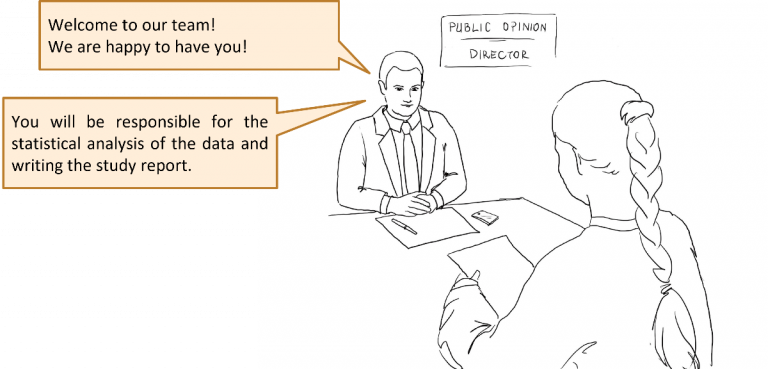
The first game we have been developing is a multiple-choice storytelling case of suspected data fabrication. Our main actor, a doctoral student Alex, accepts an invitation to take a data analyst position in a company. However, while completing the task Alex discovers that part of the data might be fabricated. What should Alex do? The story branches evolve based on the choices a player makes. The game concludes with a real-life story-ending narrative featuring what happened after the last choice was made. It is further accompanied by concluding remarks, guiding sources for further reading and didactic material. The game does not reach any specific assessment on whether the choices were right or wrong. It is meant to encourage a deliberate discussion on how to recognise and deal with a case of suspected research misconduct as well as the challenges accompanying any choice in a real-life situation.
In its current version, the game has been tested in an illustrated PowerPoint presentation with inserted hyperlinks to move along story branches. Though we planned to develop the case in a computer game format, the demonstrations of the game to potential end-users revealed that a more simple format could be better accepted and provide more flexibility in its uses. The gamification group within the Bridge project team will continue developing the game and decide upon the most user-friendly format.
Within the project, we will prepare fifteen gamified cases available to adapt to varied educational modules for academic integrity education in different disciplines or subject areas.
Bridge project on the European Conference on Academic Integrity and Plagiarism 2022
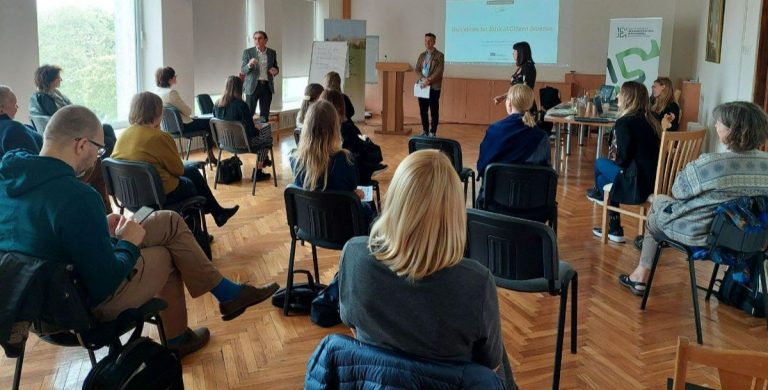
Members of the Bridge project were present at the European Conference on Academic Integrity and Plagiarism 2022 in Porto 4-6 May. The theme of the conference was “Ethics and integrity in the changing world” and it was jointly organized by the European Network for Academic Integrity (ENAI), the Faculty of Medicine of the University of Porto, and the University of Porto. In order to get feedback on our outputs, the Bridge project held three workshops. In addition to the three project colleagues that were able to travel to Porto, four colleagues were able to participate online as the conference enabled a hybrid format. The first day of the conference started with a keynote speech by Daniele Fanelli on Research integrity in a complex world who discussed the question of the relationship between complexity and questionable research practices.
During one of the following concurrent sessions, the Bridge group had a chance to focus on the gamification outputs by having a workshop “Bridging academic and research integrity in a game on fabrication“. After presenting the project and the rationale behind the game, we played the game together with the audience using Mentimeter and Padlet to get feedback. Bridge team in Porto Source: Bridge photo archive The first day ended on a great note for the Bridge project as one of our members, Dita Henek Dlabolova received the ENAI Outstanding member award. Congratulations, Dita! Day two of the conference started with a keynote by Ana Marušić on Challenges in publishing ethics and integrity who gave us an editor’s perspective on the publication ethics and provided us an overview of different challenges that editors have ranging from honest errors to fraud. After one round of the concurrent sessions, co-ordinator of the Bridge project and the vice-president of the ENAI Sonja Bjelobaba moderated the panel discussion on the “New challenges in plagiarism detection” sponsored by Turnitin. In the afternoon, the Bridge group had an engaging workshop on our Checklists for Master Students, PhD students, and Their Supervisors on the transition from academic integrity to research integrity. As the conference gathered experts in these fields, they had the opportunity to carefully read the first draft of the checklists. We got very insightful comments that will help us further develop the checklists before presenting them to the public.
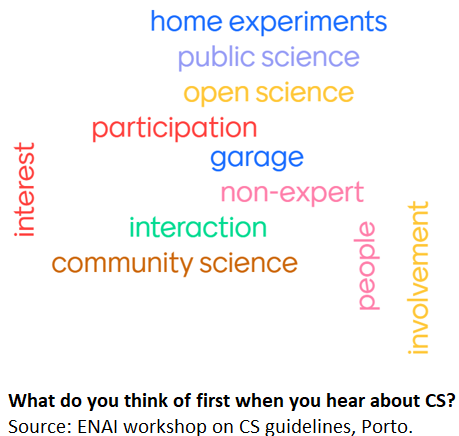
The discussions continued during the evening visit to the Porto Wine Cellar and the gala dinner at the Casa da Música. The last day of the conference started with yet another captivating keynote by the legendary Elisabeth Bik who in her talk “The Dark Side of Science: Misconduct in Biomedical Research” taught us on different aspects of image manipulation. In the concurrent session, the Bridge project presented its Guidelines for Research Ethics and Research Integrity in Citizen Science. Together with the workshop participants, we discussed different views on citizen science and potential ethical issues that could emerge in such projects. The conference ended with a keynote by Teddi Fishman: “How do we Succeed? Goals, Metrics, and Successes for Academic Integrity Initiatives in a Post-Covid, “PostTruth” World” and after that some amazing fado music performed by medical students in front of Laura Ribeiro, the conference organizer on behalf of the Faculty of Medicine of the University of Porto.
Learning, teaching and training (LTT) event in Vilnius
On May 17-19, 2022 the Bridge project team held the first Learning, Teaching, and Training (LTT) event in Vilnius, Lithuania. Each day was dedicated to one of our target groups: we started with master students, continued with doctoral students, and concluded our training with supervisors. Overall, 42 participants took part in the training.
Each training day included a common part of presentation of project outputs in progress (checklists, a gamified case, and guidelines) and a customized part for a specific target group. Master students received presentations on “Where the academic integrity and research ethics meet?” and “Introduction to academic writing”. Doctoral students had presentations on “Relevance of academic integrity and research ethics in PhD studies” and “Where is the borderline of plagiarism?”. On the last day, participants were introduced with a two-part presentation on “Research ethics for supervisors”.
The training was mutually beneficial. Participants had an opportunity to find out about the project and which outputs would be most relevant for their use as well as gain fresh insights on the bridges between academic and research integrity, business ethics, and citizen science ethics. Bridge project team gained valuable feedback that will help to improve the outputs that are under development. Also, it was an efficient way to understand how the outputs will be accepted by foreseen end-users. For example, checklists for master and doctoral students on academic and research integrity related aspects when preparing their theses or publications received a lot of attention from the participants. Likewise, supervisors both appreciated the checklist for the supervisors of master and doctoral thesis writing and publishing in accordance with the norms and values of academic and research integrity and were interested in corresponding checklists for the students. The common agreement among the participants was that they found the checklists relevant not only for their personal use but would suggest them to their colleagues or even institution-wide applications. The final versions of all three checklists shall be publicly available on the project website in Autumn 2022.
The LTT participants were not much familiar with the concept of citizen science. However, we believe that it is important to include aspects of ethical citizen science into research education as the application of citizen science in research is expanding. The project team, therefore, had to look for inventive ways to introduce the Guidelines for Research Ethics and Research Integrity in Citizen Science to the participants. The role-play improvisation guided by the project team and engaging participants was an efficient solution. It allowed participants to relate their own research experiences with a mock situation of a citizen science project. The activity created space for an active discussion which led to a list of the most critical ethical issues that participants perceived as potential risks of citizen science. The close correspondence of the critical issues with the content of the Guidelines developed by Bridge serves as the first external validation exercise for the project team before introducing them to the rounds of expert revision.
Photo: LTT event participants engaged in the role-play. Archive of the Office of the Ombudsperson for Academic Ethics and Procedures
Overall, the feedback received from the participants on the LTT sessions was highly positive. 15 responses were gathered by 1 June 2022. All of them agreed and strongly agreed with the statements that the topics covered were relevant and informational, and the training enhanced their knowledge and skills in this topic area. The overall satisfaction with the quality of the training and with the overall training experience was very high. Among the things that were the best within this training, the participants considered concentrated, structured, clear, well-presented information, very good examples or case studies, practical tips to supervisors, discussions and sharing of good practice, academic writing course, project outputs (checklists, the bridge from academic to business integrity), as well as the methodological approach of organizing the trainings, professionalism of lecturers and organizers, the atmosphere, the opportunity to meet fellow students / offline meeting, opportunity to ask questions immediately / to share the experience with other participants, etc. Out of 15 respondents, 13 would recommend the training to their fellows.
Following the LTT in Vilnius, the project team will shortly finalize two outputs: checklists and the Guidelines for Research Ethics and Research Integrity in Citizen Science. Further, dedicated project teams will continue developing gamified cases and the guidelines bridging academic integrity, research integrity, and business ethics – including the role-play on citizen science!
Further progress & events
The upcoming second Learning, teaching, and training event (LTT) and first Multiplier event (ME) of the project will be held in North Macedonia in October 2022, organized by South East European University both in Skopje and Tetovo campuses. During this event the project team will present the design of gamified cases to the target audience – master and doctoral students, and supervisors – through LTTs, while the theme for the ME will be “Integrity in Business and Society”.
Bridge project will be presented at the second ENAI Academic Integrity PhD Summer School in Canakkale Onsekiz Mart University, Turkey. As doctoral students are one of the project target groups, we are looking forward to engaging discussions on the Checklists and the Guidelines.
During 2022-2023, the project team will organize webinars introducing the outputs. Webinars will be delivered both in English and in national languages by each project partner. Moreover, starting in September, ENAI will organize a series of monthly webinars – and the Bridge project has been invited to deliver one of the fall webinars. More information is coming on our website and on social media, so stay tuned!
BRIDGE: Bridging Integrity in Higher Education, Business and Society
Funded by Erasmus+ programme, Key Action “Cooperation for innovation and the exchange of good practices”, Action Type “Strategic Partnerships for higher education”, project 2020-1-SE01-KA203-077973.
Project coordinator: Uppsala University (Sweden)Project partners: Mendel University in Brno (Czechia), Office of the Ombudsperson for Academic Ethics and Procedures of the Republic of Lithuania (Lithuania), South East European University (North Macedonia), Kherson National Technical University (Ukraine), Lithuanian Centre for Social Sciences (Lithuania)